
Superhero Crime Open World War
PSV SANDBOXES TEKNOLOJI ANONIM SIRKETIAdventure
4.669.00 Reviews
- Version
- 14.5.4
- Installs
- 1.00M
- Age Rating
- Everyone
Screenshots
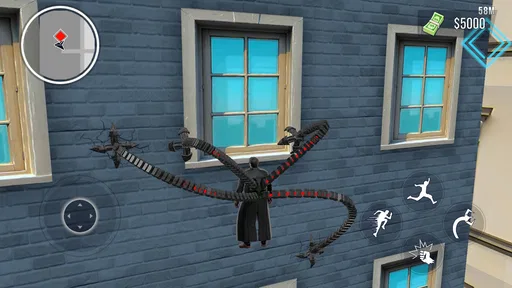
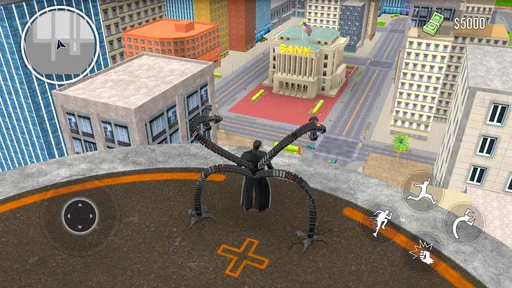
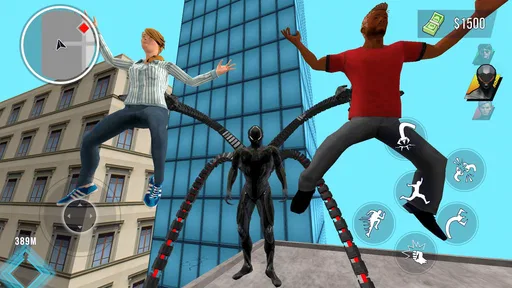
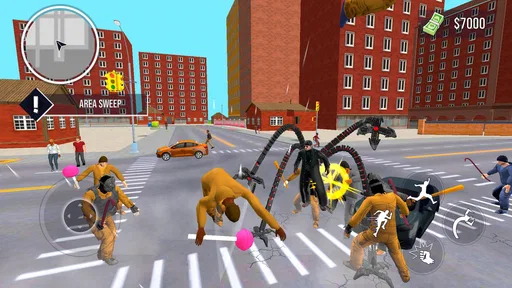
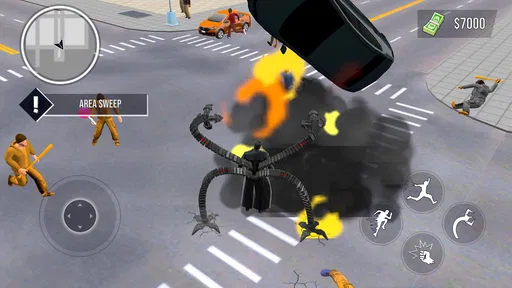
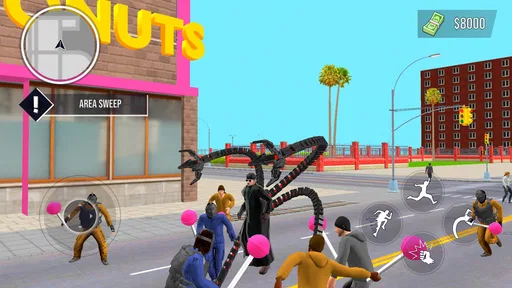
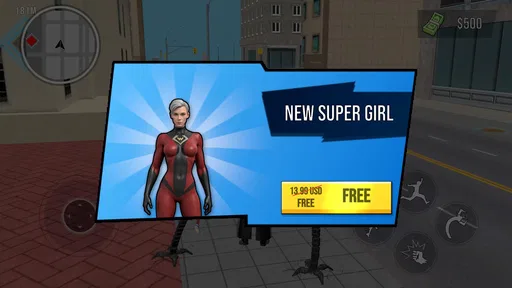
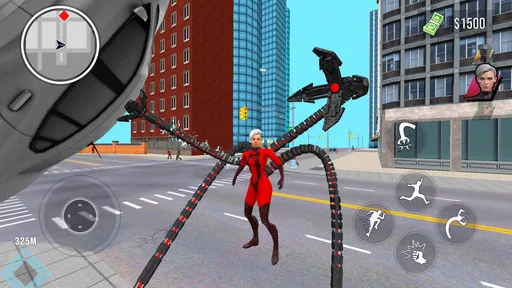
Our Review of Superhero Crime Open World War
 Analysis by Appyee
I approached Superhero Crime Open World War expecting a quick superhero-themed action game, but what kept me playing was its simple cycle: enter the city, cause trouble, fight through an objective, enjoy the immediate payoff, and then decide whether to start another run. It is built as an adventure game with an open-world crime-simulator setting, mixing action-game tasks with superhero combat. That combination makes it easy to understand within a few minutes, even if the experience is less focused than a dedicated story adventure or a polished competitive fighter.
The first thing worth knowing is that this is a free game, aimed at Everyone, and it runs on Android devices using version 7.1 or later. It has already passed the one-million-install mark, with an average score of 4.5 from roughly 8.9 thousand ratings. Those numbers suggest that the broad idea works for many players, but they do not tell you whether its particular blend of wandering, crime-themed action, and superhero fighting suits your taste. After spending time with it, I would describe it as a casual action sandbox rather than a deep role-playing adventure.
How the first action sets the tone
The opening appeal is immediate movement. Instead of asking me to learn a complicated system before anything happens, the game points me toward the kind of activity its name promises: exploring an urban environment, getting into trouble, and using superhero-style combat to push through encounters. That directness is useful on a phone because I can begin playing during a short break without first studying a long tutorial or memorizing a large set of commands.
The best way to approach the first session is not to treat the city as a fully realistic simulation. I found more enjoyment by viewing it as a playground for short bursts of action. I move toward something interesting, test the controls, fight when an encounter appears, and then look for the next reason to continue. The setting gives the game room to breathe between fights, but the combat is still the main attraction.
That distinction matters when comparing it with other adventure games. A narrative-focused title usually gives me carefully staged scenes, stronger character development, and a clearer route through the plot. A traditional superhero fighter usually gives me tighter arenas and more precise battles. This game sits between those two approaches. Its advantage is freedom and variety; its weakness is that neither side is explored with the same depth as a specialist game.
For a new player, I recommend using the first few minutes to learn how movement feels before rushing into every confrontation. On a touchscreen, the difference between a comfortable control layout and a frustrating one becomes obvious quickly. I pay attention to whether I can turn, attack, and reposition without accidentally losing sight of the target. That small adjustment period makes later encounters feel less chaotic.
The action is strongest when I keep goals small
I had better sessions when I chose one immediate purpose instead of trying to dominate the entire city. A short objective, a nearby fight, or a quick exploration route gives the game a satisfying shape. If I wander without any intention, the open-world structure can feel less meaningful because the environment becomes a backdrop rather than a source of decisions.
This is one of the more useful hidden lessons of the game: freedom works best when I create my own temporary mission. For example, I might begin by exploring, shift into combat after spotting an opportunity, and then stop once that encounter has delivered its reward. That approach prevents the world from feeling like an endless loop with no finish line.
The superhero theme also changes how I judge the action. I am not looking for the careful vulnerability of a realistic crime game. I expect exaggerated movement, quick confrontations, and a sense that the character can handle situations ordinary people could not. Players who enjoy that fantasy will probably accept the broad, arcade-like feel more readily than someone seeking grounded driving, stealth, or police simulation.
The feedback rhythm: action, reaction, and momentum
The central feedback rhythm is easy to recognize. I take an action, the game responds with combat or movement feedback, I clear the immediate problem, and the resulting progress gives me a reason to continue. This is not a slow-burn experience where the reward arrives after a long chain of preparation. Its satisfaction comes from the short distance between pressing a button and seeing something happen.
That quick response is valuable for mobile play. If I only have a few minutes, I can still complete a small slice of activity rather than feeling that I have abandoned a long mission halfway through. The same quality can also become repetitive, because the basic pattern remains familiar: approach, engage, overcome, and move on. The game needs the surrounding freedom to keep that pattern from becoming mechanical.
Combat is therefore judged less by complexity than by clarity. I want to know why an attack succeeded, why I was hit, and what I should do differently next time. When the feedback is readable, even a simple encounter can feel active. When several things happen at once, the open-world setting can make the action feel less controlled than a compact fighting arena.
My practical advice is to avoid treating every encounter as a test of endurance. Repositioning and choosing when to engage are often more useful than repeatedly attacking without a plan. The city gives me space, so I try to use that space instead of standing in the middle of every conflict. This makes the superhero fantasy feel more deliberate and reduces the irritation of messy fights.
Why the open world helps, and where it gets in the way
The open-world structure provides a sense of ownership over the session. I can decide whether I want immediate action or a little exploration first. That choice is the main difference between this and a level-based action game that sends me through one fixed room after another. The environment gives each session a slightly different starting mood, even when the underlying activities remain familiar.
At the same time, openness can expose the limits of a smaller mobile experience. A large setting is not automatically a deep one. If I expect every street to contain a meaningful story, a surprising side activity, or a distinct tactical challenge, I may be disappointed. I found the world more enjoyable as a space for movement and spontaneous trouble than as a densely authored adventure.
That trade-off makes the game a better fit for players who like improvisation. I can invent a personal challenge, such as reaching a location without taking unnecessary fights, or I can simply follow the action wherever it leads. It is less suitable for someone who wants a carefully paced campaign with a strong emotional arc and a clear sequence of dramatic discoveries.
The game’s short description, “Superhero Crime,” is actually a fair guide to the mood, but it does not capture the way the loop depends on player initiative. The title suggests a complete fantasy, while the enjoyable part comes from deciding how to turn that fantasy into a small objective during each visit.
Rewards and the reason another session begins
A reward works best here when it arrives as confirmation that my last action mattered. Finishing an encounter, making progress, or simply surviving a chaotic stretch gives me a small sense of completion. That is enough to make another session tempting, especially when I stop after a successful moment rather than playing until the activity feels exhausted.
I see the reward structure as motivation rather than the main reason to play. The game is most appealing when the action itself is enjoyable and the reward adds direction. If I need a powerful long-term progression system to stay interested, this may feel lightweight. If I enjoy quick goals and visible forward movement, the loop is easier to appreciate.
There is also a financial point to consider. The game is free to start, but optional in-app purchases range from $0.49 to $17.99 per item. I would approach those purchases carefully and decide first whether the basic action loop holds my attention. A free entry point is useful, but it does not automatically mean the complete experience will suit every player without spending.
My preferred workflow is simple: play without buying anything during the first several sessions, identify which activities I actually repeat, and only then decide whether an optional purchase would improve that routine. This is especially sensible for younger players, since the Everyone rating describes the intended age suitability but does not remove the need for sensible purchase controls on a shared device.
Rewards feel better when I stop at the right moment
One non-obvious strength is that the game benefits from deliberate stopping. Because the loop is built from short action-and-reward cycles, ending after a completed objective preserves the feeling that the session achieved something. Continuing automatically into another similar encounter can make the reward feel less distinct.
For an everyday example, I can imagine playing while waiting for a bus. I start with a quick walk through the city, take on one confrontation, collect the immediate sense of progress, and close the game. If I have more time later, I return with a fresh goal instead of trying to remember a complicated chain of story events. That makes it more practical than a long-form adventure for fragmented schedules.
The opposite scenario is a long evening when I want a rich campaign. In that situation, the repeated loop may not provide enough variety on its own. I would choose a more narrative-heavy adventure if I wanted carefully developed characters, a stronger plot, or missions designed around escalating drama rather than repeated bursts of open-world action.
Resetting the session without losing the appeal
Every action sandbox depends on the reset. After the immediate excitement fades, I need a reason to begin again. Here, the reset comes from returning to the city with a new intention: explore a different route, seek another fight, or test whether I can handle the next challenge more efficiently. The world acts as a reusable stage, and my chosen objective supplies the variation.
This reset is more personal than story-driven. I am not always returning because a character has asked me to uncover the next plot twist. I return because the previous session left me with another small experiment to try. That can be surprisingly effective for casual play, although it places more responsibility on me to create variety.
I found three habits that make the reset work better. First, I change the purpose of the next session rather than repeating the exact same route. Second, I treat exploration and combat as separate moods, switching between them instead of forcing constant action. Third, I stop when the current goal is complete. These habits sound simple, but they prevent the open world from turning into aimless wandering.
The reset also highlights the game’s main limitation. Players who need a strong sense of permanent consequence may not find enough reason to care about repeating the same kind of activity. The game is designed around returning to action, not around building a detailed personal history in the city. That is not a flaw for everyone, but it is an important expectation to set before installing it.
Who should play it and who should skip it
I would recommend it to someone who wants a free superhero-themed action game that can be understood quickly, supports short sessions, and leaves room for casual experimentation. It is particularly suitable for players who enjoy open environments but do not need every corner to contain a major story. The age rating of Everyone also makes it approachable for a broad audience, although adults should still keep an eye on optional purchases when children use the device.
I would suggest skipping it if your priority is competitive combat precision, a serious crime simulation, or a deeply written adventure campaign. A dedicated fighting game will usually offer more refined match structure, while a story adventure will provide stronger pacing and character motivation. This game’s identity comes from combining several familiar ideas, not from perfecting one of them.
Device compatibility is straightforward for older Android hardware because the minimum operating system is 7.1. Still, compatibility is not the same as identical comfort on every phone. Touch controls, screen size, and how easily I can see the action all affect the experience. I would give the game a short trial on the intended device before judging it by someone else’s session.
The current version is 14.2.7, which is useful to check when troubleshooting or comparing experiences with another player. More importantly, I would make sure the game is updated through the normal app store before assuming that a control or performance issue represents the whole product. Version differences can affect how a mobile game feels in daily use.
My verdict on the complete loop
The complete loop is clear: I take the first action by entering the city and choosing trouble, receive fast feedback through movement and superhero combat, gain a reward that confirms progress, reset by returning with a new personal goal, and begin again because the next short experiment is easy to imagine. That structure is the real reason the game can hold attention beyond its first novelty.
In my experience, the strongest sessions are not the longest ones. They are the sessions where the action feels immediate, the objective is small enough to finish, and the next visit has a different purpose. The weakest sessions happen when I expect the open world to provide all the direction for me. Without a self-chosen goal, the freedom can feel thinner than the title suggests.
The developer, PSV SANDBOXES TEKNOLOJI ANONIM SIRKETI, has positioned the game around an accessible mix of crime-themed roaming and superhero action. That mix is broad enough to attract players who want variety, but it also means the experience has clear compromises. It is not as focused as a pure fighter and not as developed as a full adventure campaign.
My final recommendation is cautious but positive: try it if you want a free, easy-to-enter mobile sandbox for quick action sessions. Keep your expectations centered on the loop rather than on a richly simulated city. The best reason to return is the next small challenge you create for yourself, not the promise of an endlessly deep world. For that kind of casual superhero play, it does its job well enough to deserve a place on an Android device, especially when I want immediate action without committing to a long campaign.
Privacy and Permissions
See what permissions an app requests and how it handles your data.
- Wi-Fi connection information
- view Wi-Fi connections
- Other
- view network connections, full network access, control vibration, prevent device from sleeping, Google Play license check
Verdict
Strengths of Superhero Crime Open World War
- Large open-world map to explore freely
- Many superhero abilities make combat varied
- Fast-paced missions keep gameplay engaging
- Vehicle driving adds variety beyond fighting
- Easy controls suit quick mobile sessions
Limitations of Superhero Crime Open World War
- Frequent ads may interrupt the gameplay experience
- Graphics look dated on newer phones
- Some missions feel repetitive after extended play
- In-app purchases can speed up progression
- Performance may drop during crowded battles
Similar Picks in This Category
View All
Roblox
Roblox Corporation4.2

Pokémon GO
Niantic, Inc.3.5

Ninja warrior: legend of adven
TOH Games4.6

Ninja Arashi
Black Panther4.6

Eyes - The Horror Game
Fearless Games sp. j.4.5

Critical Action:Gun Strike Ops
FPS Shooter & Action Game4.3
Frequently Asked Questions
What is Superhero Crime Open World War about?
Superhero Crime Open World War is an action game focused on exploring a large urban environment while fighting criminals and completing missions. You control a powerful superhero with special abilities, travel through city streets, confront enemy gangs, and take part in battles that combine driving, combat, and adventure elements. The game is designed for players who enjoy open-world superhero experiences with a crime-fighting theme.
Can I play Superhero Crime Open World War offline?
The game may support offline play for its main missions, but some features can depend on an internet connection. You may need to connect to the internet for advertisements, updates, analytics, or optional online content. Before downloading, it is worth checking the store description and testing the game with Wi-Fi and mobile data disabled, especially if you want to play while traveling or in areas with limited connectivity.
Is Superhero Crime Open World War free to download?
Superhero Crime Open World War is generally offered as a free download, allowing players to install and try the core gameplay without paying upfront. However, free games can include advertisements, optional purchases, or rewards connected to viewing promotional videos. Check the Google Play Store or App Store listing for the current pricing, in-app purchase details, age rating, and any regional differences before installing.
What devices are compatible with the game?
Compatibility depends on your device model, operating system version, available storage, and hardware performance. Because the game features an open city, action sequences, and 3D graphics, older phones or tablets may experience slower loading, frame-rate drops, or reduced visual quality. Review the official store requirements and make sure you have enough free storage for the installation and future updates.
Does the game contain ads or require purchases?
The game may use advertising to support its free-to-play model, and advertisements can appear between missions, after certain actions, or when claiming optional rewards. It may also offer in-app purchases for upgrades, currency, characters, or other gameplay benefits. These purchases are not always necessary to start playing, but users should review the payment settings and enable purchase restrictions if children will use the device.
Play our best games!


